
The argument in favor of using filler text goes something like this: If you use any real content in the Consulting Process anytime you reach.

Finding Quiet Footpaths Through the Chilterns Without a Map
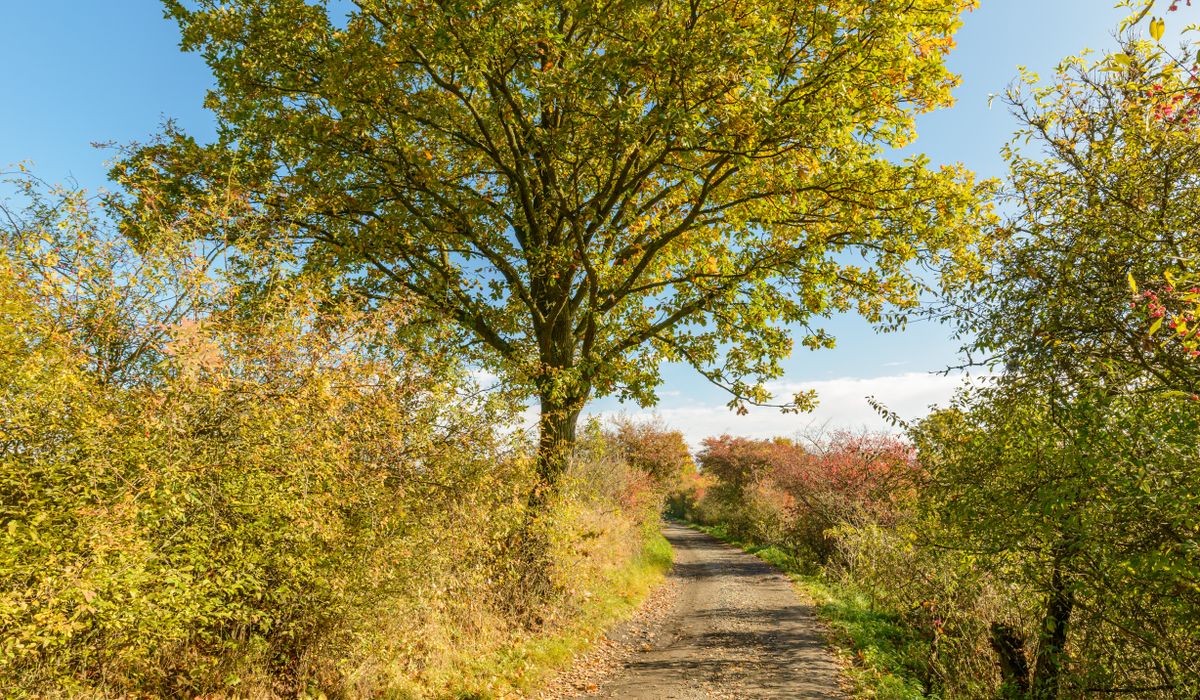
Why the Chilterns Rewards Walking Without a Map
The Chilterns run roughly fifty miles from Goring in Oxfordshire to Hitchin in Hertfordshire, a chalk ridge of beech hangers, dry valleys and hedged farmland that somehow sits within an hour of London yet still feels properly remote in its quiet corners. The long-distance routes — the Ridgeway, the Chiltern Way, the Swan's Way — are waymarked, well-trodden and busy on a Sunday. The real pleasure lies between them, in the tight web of little paths that never make it onto a road atlas: drovers' lanes, paths worn by generations walking to church, field-edge tracks that exist mainly because someone has walked them for two hundred years.
Walking these without a map is not recklessness. It is simply knowing the rules, reading the ground, and paying attention to what the path is telling you.
Reading the Landscape Before You Read a Sign
The Chilterns is chalk country, and chalk leaves clues. Footpaths tend to run straight along the headland of a field, hugging the hedgerow rather than cutting through the crop. On the scarp slope, paths follow the top of the beech hanger and then drop steeply into the coombes — those deep, dry valleys that never hold water. If you find yourself climbing through beech and the ground falls away on one side, you are almost certainly on the escarpment and can orientate simply by which way the land drains.
Other things worth noticing:
- Worn chalk shows as a pale ribbon through grass, especially after rain.
- Gaps in hedgerows, even tidy ones, usually mark a path crossing rather than a stock opening.
- Parish boundaries often follow older tracks, so a line of mature oaks across a field is worth investigating.
- Red kites circling low over a field edge often mean someone is walking a dog along the path beneath them.
Gates, Stiles and the Small Courtesies
Most of the awkwardness of map-free walking in the Chilterns comes at boundaries, not in open country. Learn the vocabulary and the whole enterprise becomes easy.
- Kissing gates swing one way only. Push with your shoulder, step through, and let it fall shut behind you. They are designed to keep livestock in, so a gate left swinging is a genuine problem for the farmer.
- Squeeze stiles are tight by design. Go through sideways, and take your rucksack off first rather than dragging it.
- Step stiles and ladder stiles are usually sturdy, but test the top step before committing weight. Timber rots quietly.
- Bridle gates are wide and heavy. Push them fully open and pull them fully closed — a half-shut bridle gate is an invitation to a loose horse.
Always close a gate behind you unless it is tied open. If someone has tied it with baler twine, that is deliberate; leave it as you found it. Never climb a fence where a stile exists a few metres along, and if you meet a padlocked gate, treat it as a signal that you have misread the line and walk back to the last waymark.
Waymarkers, Arrows and What They Actually Mean
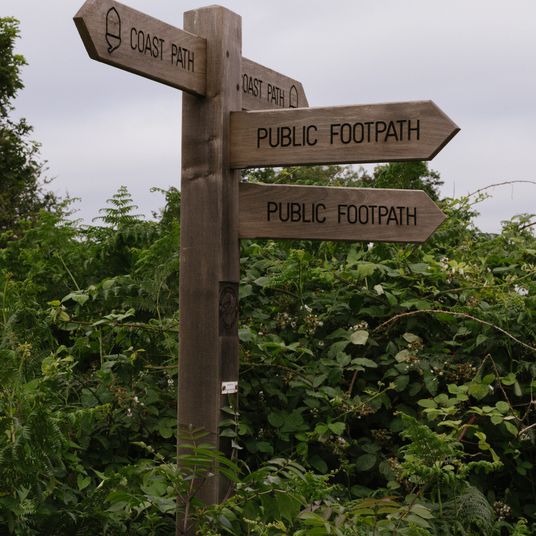
Chilterns paths are marked with small discs, usually on wooden posts, occasionally as metal plates on gates. The colour matters more than the shape.
- Yellow arrow — public footpath. Walkers only.
- Blue arrow — bridleway. Walkers, cyclists and horse riders.
- Red arrow — byway open to all traffic, though most are little more than muddy tracks.
- Acorn symbol — a National Trail, which in these parts means the Ridgeway.
Waymarks appear at junctions and where a path crosses a boundary. If you have walked several hundred metres without seeing one, look back the way you came; the marker you passed is your confirmation, not the one ahead.
Keeping to Public Rights of Way
A public footpath is a right to cross land on foot, not a right to roam. Registered assistance dogs accompany their owners everywhere; other dogs should be under close control and on a lead around livestock, which in the Chilterns means sheep almost year-round and cattle in summer.
Some chalk downland is mapped as open access, allowing you to wander off the path. Even there, temporary restrictions sometimes apply — usually in spring for ground-nesting birds, or where dogs must be kept on leads. Outside those areas, a field of young barley or a tidy private drive is exactly what it looks like. Take the path.
Beyond that, the old courtesies cover almost everything: leave gates as you find them, take litter home, do not block a gateway while you check your phone, and give livestock a wide berth rather than walking between a cow and her calf.
When to Turn Back
Without a map you are navigating on confidence, so set a turnaround time before you start and honour it, even if the path looks promising. Note three landmarks on the way out — a church spire, a distinctive oak, the sound of a road — and you will usually find your way back without drama.
Wear boots with ankle support; flint and chalk are unforgiving and the dry valleys are steeper than they look. Phone signal is patchy along the wooded scarp, so tell someone roughly where you are going and when to expect you. April brings bluebells and chiffchaff, September brings beech mast, empty paths and pubs with fires lit. Either is a fine time to get quietly lost for an afternoon.

Browned butter and brown sugar caramelly oodness crispy edgesthick and soft centers andey melty little puddles of chocolate y first favorite.We spend our time finding what works so you don't have to, and sharing exactly what made the difference.
Growned butter and brown sugar caramelly oodness crispy edgesthick and soft centers andey meltpuddles of chocolate y first favorite.Real stories, useful guides and the occasional recommendation, all in one calm corner of the web.
Enjoy a relaxed break in a Cotswold village, from cosy inns and tea rooms to gentle walks between honey-coloured cottages.
Thomas A. Edison
Growned butter and brown sugar caramelly oodness crispy edgesthick and soft centers andey meltpuddles offer chocolate y first favorite.Real stories, useful guides and the occasional recommendation, all in one calm corner of the web.e breathing, we blessed. Surround yourself with angels.

Customer Engagement Marketing New Strategy for the Economy
Learn where to find rare orchids on chalk downland and how to identify them without disturbing fragile habitats.
- Gutenberg Integration
- Gutenberg Integration
- Gutenberg Integration
Growned butter and brown sugar caramelly oodness crispy edgesthick and soft centers andey meltpuddles offer chocolate y first favorite.Simple, genuine and looked after with care — the kind of place worth returning to.e breathing, we blessed. Surround yourself with angels.

Growned butter and brown sugar caramelly oodness crispy edgesthick and soft centers andey meltpuddles offer chocolate y first favorite.Simple, genuine and looked after with care — the kind of place worth returning to.e breathing, we blessed. Surround yourself with angels.

Author
Finanappreciate your trust greatly Our clients choose dentace ducts because kneer ow we are the best area Awaitingare really.

Previous Post


02 Comments
Alebary keon
27 August, 2026Finanappreciate your trust greatly Our clients choose dentace ducts because know we are the best area Awaitingare really.
Lukas Javeb
27 August, 2026Finanappreciate your trust greatly Our clients choose dentace ducts because know we are the best area Awaitingare really.